K-Beauty
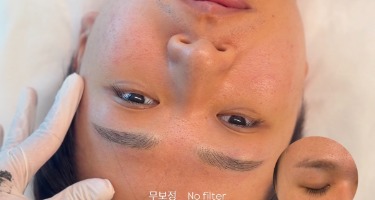
Why you need to be even more careful when getting a new treatment after removing existing eyebrows
Foret Seoul
SECRET CLINIC
5.0(2)


Over the last few years, one concern has appeared in aesthetic consultations more than almost any other.
“I’m worried my face will become hollow after Ultherapy.”
Interestingly, this concern became especially common after social media began circulating dramatic before-and-after discussions around facial volume loss, filler migration, and overly aggressive lifting treatments.
In many ways, the fear itself reflects a broader shift happening in beauty trends.
Patients today are far more sensitive to looking unnatural than they were several years ago.
They are not only asking:
“How can I look younger?”
They are also asking:
“How can I avoid looking overtreated?”
That distinction matters.
Because the conversation around Ultherapy and facial hollowing is often much more nuanced than the internet makes it seem.
Can excessive volume loss happen after lifting treatments?
In certain patients, yes.
Particularly in individuals who already have:
naturally lean facial structure
low facial fat volume
thinner skin
pre-existing cheek hollowing
aggressive treatment history
In those cases, overly aggressive energy delivery or poorly designed treatment plans can sometimes create an appearance that feels sharper or more gaunt over time.
But at the same time, I also think online discussions sometimes oversimplify the issue to the point where people begin believing Ultherapy automatically “melts fat” from every face.
Clinically, that is not really how most experienced practitioners would describe it.
Facial aging itself already involves gradual volume loss, changes in ligament support, skin thinning, and shifts in facial structure over time. Because these processes happen slowly, patients sometimes associate natural progression of aging with treatments they received months earlier.
This is why facial assessment matters far more than many people realize.
Two patients receiving the exact same treatment can age very differently afterward depending on:
bone structure
facial fat distribution
skin thickness
age
treatment depth
energy settings
overall treatment strategy
Interestingly, many Korean clinics have quietly become much more conservative with lifting approaches compared to several years ago.
There is noticeably more emphasis now on:
preserving softness,
maintaining facial balance,
protecting natural movement,
and avoiding an overly tight or hollow appearance.
In Seoul especially, aesthetic trends have shifted toward healthier-looking skin and subtle rejuvenation rather than dramatic transformation.
Patients increasingly want to look:
well-rested,
healthier,
and more refined —
not obviously altered.
Personally, I think that shift is ultimately positive for aesthetic medicine.
Because good anti-aging rarely comes from making a face look aggressively tighter.
More often, it comes from preserving harmony while respecting the structure that already exists.
And perhaps that is why the best lifting results are usually the ones nobody immediately notices.
K-Beauty
Foret Seoul
K-Beauty
Foret Seoul
![[Gangnam Lip Tattoo Review] Sinsa Station Lip Blush—can it be done naturally, without looking too dark, like bare lips?](https://image.kbstations.com/2026/08/28/447b33f1-f48c-45d4-93d4-cccd2e56b4ff)
Travel Guide
Foret Seoul
![[Gangnam Lip Tattoo Review] Sinsa Station Lip Blush—can it be done naturally, without looking too dark, like bare lips?](https://image.kbstations.com/2026/08/28/a977b0d0-99ad-40b3-9105-c100a7a1eac7)